How long it stays
The laptop is shut. Why am I still answering emails in my head?
The laptop has been shut since seven. You are at dinner, nodding at a story about a parking dispute while composing, in full, a reply to an email nobody has sent yet.
The office was a good invention with one clear rule: work lived there. It had a door. At six you walked out through the door and the work stayed behind, sitting in the dark with the stapler.
Then somebody put the office inside a slab the size of a chopping board, and now the work comes home in your bag and waits. You close the lid. This does for work roughly what closing the fridge does for hunger.
And on Sunday at about five, Monday moves in early. So: what the research on switching off has found, and what a builder would do about a wall this warm.
Where work turns up uninvited
-
Saturday market
You are choosing tomatoes. You are also, silently, in a budget review.
-
Brushing your teeth
You remember the attachment. You did not attach the attachment. It is 11:15 pm and you are foaming.
-
Sunday, 5 pm
The light changes and so do you. The weekend has seven hours left, and you have already left it.
-
3 am
You wake with the answer to a problem from Thursday. It is a good answer. It will be gone by morning.
What the switching-off research found
Work psychologists have a term for the thing you are failing to do. They call it psychological detachment: being mentally away from work, and not only physically. By that definition a great many people have not left the office in years.
Less of it goes with more strain, which will surprise nobody at this table. And the obvious fix, sternly telling yourself to stop thinking about it, was tested in a well-known experiment involving a white bear. The bear won.
-
Off is the point
A research review found that the less people switched off after work, the more strain and the poorer well-being they reported.
Some evidence -
Don't-think backfires
People asked not to think of a white bear for five minutes couldn't manage it. Afterwards they thought of it more than people who had been told to think about it from the start.
Early evidence -
Tomorrow dents tonight
A review of sleep research found stress went with shorter, more broken sleep, and that dreading the next day's demands seemed to matter especially.
Some evidence
The standard advice
Switching off has an advice industry. Much of it arrives by notification.
-
Managers
"Take care of yourself this weekend!"
The catch Sent at 7:40 pm on Friday, two lines below the thing that is due Monday.
-
Productivity people
Turn off notifications. Delete the app.
The catch Helps with the pings from outside. The email you are drafting in your head was never using the network.
-
Work psychologists
Mark a clear end to the work day, then do something absorbing that has nothing to do with it.
The catch This matches the detachment research. The end has to come every day, including days when work disagrees.
-
Doctors
If dread of work costs you sleep most nights, or Sundays are lost to it week after week, talk to a doctor or a mental health professional.
The catch And if the workload itself is the problem, no evening habit fixes that.
Materials science
What a builder would fit
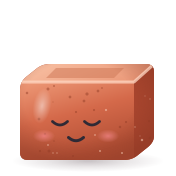
A brick oven is a marvellous object. You light a fire in it for a couple of hours, rake the fire out, and it goes on baking bread until evening on stored heat alone. An engineer would say brick has a long time constant: once hot, it needs hours to come back to room temperature, fire or no fire.
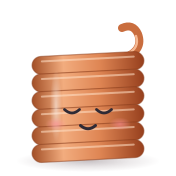
This is excellent news if you are a loaf. It is less convenient when the fire was a nine-hour work day and the thing now being baked is your dinner conversation. Some people run nearer to copper, which is cool minutes after the flame goes off: laptop shut, home. Others run nearer to brick, and they tend to be the ones who remember on Thursday what was promised on Monday, because whatever holds the heat holds the thread. Builders deal with it using a gap. Between a hot structure and a cool one they fit a thermal break so the heat stops at the join.
Still at the office? Tick what fits
Tick any that fit.
Five picks, and you know which end you sit nearer: copper or brick.
Find out in five picksVedic astrology
Work at the top, home at the bottom
A Vedic chart is a floor plan with twelve rooms, and the classical texts are firm about what goes in each. The 10th house gets profession, authority and honour. The 4th house, directly opposite, gets houses, mother and happiness. Work at the top of the chart, home at the bottom. The authors had clearly met an office.
Phaladeepika then says where each planet is strongest. The Sun and Mars get their strength in the 10th. The Moon, which the texts make the mind, gets its strength in the 4th: the mind is at its best at home. Our reading, which the verse does not state: a chart with the Moon up in the work house, or with a work planet parked in the home house, might describe a mind that goes to the office and stays. This is untested. Your fifteen evenings are part of the test.
As regards directional strength or Dik Bala the Sun and Mars get this strength when they are in the 10th house. Mercury and Jupiter get directional strength when they are in the 1st house (Lagna), Saturn gets this strength in the 7th house and the Moon and Venus in the 4th house.Phaladeepika, 4.2
If the Moon went to the office, you'd know these
Tick any that fit.
Now look at your chart
Open a free Vedic chart app (sidereal, Lahiri setting), find the list of houses, and look for any of these:
Nothing fits? Then the idea may simply be wrong. Report it either way; the experiment never asks when you were born.
Untested so far, and not a reading of you. A chart does not set your working hours or your evenings.
Your 15-day experiment
The last song
Give the work day an ending you can hear.
- PsychologyStaying mentally at work goes with more strain, and ordering yourself to stop tends to backfire.
- MechanicsThe builder's fix: one gap at the join, fitted the same way every day.
- Karma alignmentMusic and making a place pleasant are Venus's own acts, and the home is the 4th house's ground.
Each day
- Pick one song and keep it for all 15 days. Choose carefully.
- When work ends, shut the laptop and put it where you can't see it. A bag, a drawer, under a cushion.
- Play the song. While it plays, change out of your work clothes and make one corner of home nicer: clear the table, put the kettle on.
- When the song ends, work has ended. If a work thought turns up later, don't fight it. Hum the first line of the song at it and carry on.
Each evening, write one line for each
- What time did the song play today?
- Roughly how many times did work come to mind between the song and bed?
- Did you open work email or chat after the song? Yes or no.
Day 1 of 15
Under fifteen minutes a day. Free. Nothing rides on it.
- Day 5 Is the count dropping, flat or rising?
- Day 10 Look at your two Sundays. What time did Monday arrive on each?
- Day 15 Compare the first evening's count with tonight's. Then tell us, and tell us the song.
Quick answers
Why can't I stop thinking about work at home?
Research finds that heavier workloads go with less mental switching off after hours, so the busiest periods are when work is most likely to follow you home.
Why do I feel anxious on Sunday evenings?
A review of sleep research found that dreading the next day's demands was especially tied to shorter, more broken sleep. If Sunday dread costs you sleep for weeks, speak to a professional.
How do I switch off after work?
A research review links less mental switching off after work with more strain and poorer well-being. Ordering yourself not to think about work tends to backfire: in a classic experiment, people told to suppress a thought had it more afterwards. A fixed end-of-day marker followed by a different activity is worth testing.