Second time round
My fourth presentation. My hands think it's my first.
Five minutes to your fourth presentation. Same slides, same room, same clicker. Your hands are shaking as if nobody told them about the first three. Beside you, Kai is choosing between two lunches.
There is a popular theory about hard things, held by parents, managers and the entire motivational poster industry. You do the thing and it's awful. You do it again and it's less awful. By the fourth time you could do it while eating. This theory has now been tested on your hands, and your hands have filed a complaint.
Presentation number four, or interview number five, and your body has arrived as though this were a brand new event in a brand new building, possibly one that's on fire.
So: do hard things get easier with repeats, and why do some of us start from zero every time? Engineers have a view. So, it turns out, do the stars.
Further first times
-
Slide one
The clicker is in your hand. The clicker is also, for some reason, damp.
-
Interview five
"Tell me about yourself." You have told four panels about yourself. You would still like a few minutes to look yourself up.
-
The weekly call
It happens every Monday. It has happened for forty Mondays. Your heart greets it like a surprise party.
-
A year on
Someone says "you're a natural at this". You thank them. You don't mention the cold hands, or the water bottle you were holding like a railing.
What happened when they checked
Researchers have a blunt way of testing "you get used to it". They have healthy volunteers perform the same public-speaking task, then bring them back on another day to do it again. And again. The fading of a reaction with repeats is called habituation. It has five syllables, which is how you can tell it's official.
For most volunteers, the surge of stress hormone shrank with each round. For a smaller group it didn't: same task, same full response, every time. Nobody in that group was doing it wrong. Their bodies simply declined to take the earlier visits into account.
-
Most fade. Some don't.
Healthy men repeated the same public-speaking task on several days. For most, the stress-hormone response faded. A smaller group responded just as strongly each time. A small study, and men only.
Early evidence -
Some beats none
In a national sample surveyed over several years, people with some past adversity reported better mental health than people with none or with a lot. A link, and no case for seeking out hardship.
Some evidence -
Doses can be trained
Stress inoculation training is practice under small, managed doses of pressure. Across 37 studies it lowered performance anxiety and improved performance under stress. Study quality was mixed.
Some evidence
The advice so far
People have suggestions. People always have suggestions.
-
Colleagues
"It gets easier. Just keep doing it."
The catch True for most people in the studies. The word "most" is doing some heavy lifting.
-
The internet
Picture the audience in their underwear.
The catch Now you're nervous and the room is underdressed.
-
Coaches and therapists
Practise under a little real pressure, in small steps: out loud, standing, to one person, then three.
The catch The small steps are the point. Going straight to the big room only rehearses the big room.
-
Doctors
If the fear has you turning down work, losing sleep for days, or avoiding things you want, talk to a professional. There are well-studied ways to help.
The catch Shaking hands are common. Years of quiet suffering are optional.
Materials science
The metalworker's version
Bend a piece of copper wire. Now try to bend it back at the same spot. It resists. The first bend rearranged the metal inside, and it is now stiffer exactly where it was worked. Metalworkers call this work hardening and have used it for thousands of years to turn soft metal into tools. The metal does not attend a workshop. It just keeps a record.
Not everything keeps that record. Steel does. Marble doesn't: it meets each load exactly as it met the first, cool and clean, with no memory of the matter. People seem to vary the same way. Nearer the marble end, every round is opened fresh, which has one real advantage: last time's mistakes and last time's dread don't come along either. It only looks like a problem when you're standing next to steel at 9:55.

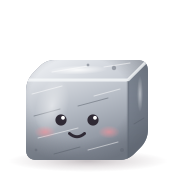
Sounds familiar? Tick what fits
Tick any that fit.
Five quick picks to see where you sit between marble and steel.
Find out in five picksVedic astrology
Mars and the growth houses
Nobody in the classical texts of Indian astrology ever measured a pulse, but they sorted people by courage all the same. They give strength, of body and of mind, to Mars (Mangal). They also name four of a chart's twelve houses, the 3rd, 6th, 10th and 11th, as upachaya houses, a word linked with growth: places where things build up over time instead of arriving finished.
As we read it, Mars in a growth house, or a chart led by one of Mars's own signs, would describe strength that adds up with repeats. Mars elsewhere might describe courage that is fully present each time but has to be summoned from scratch. To be plain, the texts never say a word about presentations. That link is ours, and it is untested. We are testing it now, which is more than the poster industry ever did.
All about one's strength (physical and mental), ... courage, ... enthusiasm, ... prowess, high thinkingPhaladeepika, 2.3
The 3rd, the 6th, the 10th and 11th are Upachaya houses.Phaladeepika, 1.18
If this is in play, a few of these should sound right
Tick any that fit.
Now look at your chart
Open your Vedic chart (sidereal, with the Lahiri setting most free apps use by default) and check for any of these:
Nothing there? Then the shaking has another source, or we have read the verses wrong. Either is worth reporting. Do the experiment regardless.
None of this has been tested yet, and none of it is a prediction. No chart knows how your next presentation goes.
Your 15-day experiment
The five-minute dose
Make the hard thing small, daily and slightly worse.
- PsychologyPractice under small, managed pressure lowered performance anxiety across 37 studies.
- MechanicsMetal hardens through many small bends at one spot. One enormous bend just breaks it.
- Karma alignmentCourage is Mars's subject, and Mars works on its feet. A small brave act, done standing, is its kind of effort.
Each day
- Pick the thing that still shakes you: the opening of a talk, an interview answer, a difficult call.
- Every day, do five minutes of it out loud and standing up, recorded on your phone or said to one person.
- Every third day, turn it up one small notch: a second listener, no notes, the actual room.
- Before you start, hold a hand out flat for five seconds and note how steady it is. Then begin anyway.
Each evening, write one line for each
- How steady was the hand before today's dose, out of 5?
- How far into the five minutes did the worst of it pass?
- Was today's notch too small, too big, or about right?
Day 1 of 15
Under fifteen minutes a day. Free. Nothing rides on it.
- Day 5 Read your hand scores in a row. Flat, drifting, or all over the place?
- Day 10 Which notch changed most: the extra listener, losing the notes, or the real room?
- Day 15 Do the real thing, or the closest you can arrange, and compare it with the last one.
Quick answers
Why don't presentations get easier for me with practice?
Getting used to a repeated stress is common but not universal. In one small study of men repeating the same public-speaking task, most showed a fading stress-hormone response, and a smaller group kept responding strongly each time.
Does what doesn't kill you make you stronger?
Only partly. In a national survey over several years, people with some lifetime adversity reported better mental health than people with none or with a lot. That is an association, and it does not mean more hardship is better.
What is stress inoculation training?
It is practice under small, managed amounts of pressure, built up in steps. A review of 37 studies found it lowered performance anxiety and improved performance under stress. If fear is making you avoid things you want, speak to a professional.