How long it stays
The argument ended at lunch. Why am I still wound up at 11 pm?
The argument ended at 1:40, over lunch. The other person has been asleep since ten. You are lying very still with a heartbeat that seems to have somewhere to be.
An argument is one of the few human activities with no closing ceremony. A cricket match has a final over. A film has credits. An argument just stops, usually because somebody has to take a call, and both parties walk off assuming that was the end.
For one of them, it was. That person eats a full dinner, laughs at a video of a goat on a trampoline, and is asleep by ten. The other is still running warm nine hours later. The pulse is behaving as though lunch is still being served.
The gap between those two people has been measured by researchers, named by engineers, and given a timetable by some very old Indian texts.
Where the afternoon goes
-
2:15 pm
Back at your desk. You have read the same email four times. It is two lines long, and one of them is "Hi."
-
Dinner
The other person asks you to pass the pickle, cheerfully, like someone with no memory of 1:40 pm. This is somehow worse.
-
11 pm
They are asleep. You can hear it. You reflect on the injustice of anyone breathing that evenly.
-
Next morning
You wake up fine. Then you remember, and the body clocks in for a second shift.
What the mood-trackers found
Some researchers measure the same person's mood again and again through ordinary days. They found that feelings have momentum. For some people, how they feel now says little about the next hour. Others carry the last hour into this one. The term is emotional inertia, borrowed from physics, where it describes objects that keep going because nobody has stopped them.
The argument itself took minutes. The going-over-it afterwards can take the whole evening, and that going-over is what researchers link with a body that stays switched on: heart, hormones, the lot.
-
Moods have momentum
People whose feelings changed slowly from one moment to the next, good feelings as well as bad, tended to report lower well-being.
Some evidence -
Thinking keeps it on
A review proposed that worry and rumination keep the heart, hormones and immune system active after the stressful event itself has passed.
Some evidence -
Long breaths out
In a month-long trial of five minutes a day, breathing with long exhales improved mood and slowed breathing more than mindfulness meditation did. One trial.
Early evidence
Methods on offer
Everyone has a method. Most were developed by people who calm down in four minutes.
-
The other person
"Are you still upset about that?"
The catch A question that has never, in the history of households, been answered with a calm no.
-
Gym people
Go hit something. Run it off.
The catch A 2024 pooling of studies found the reverse. Working the body up did not bring anger down. Winding it down did.
-
Counsellors
Slow the body first. Longer breaths out, a quieter room. Then decide whether there is anything left to say.
The catch The one with numbers behind it, and the least satisfying thing anyone can suggest at 2 pm.
-
Doctors
If you stay wound up most days for weeks, or your sleep, chest or stomach complain regularly, see a doctor or a mental health professional.
The catch No joke here. An article can time your evening. It can't examine you.
Materials science
What an engineer would time
Engineers refuse to describe anything as "taking a while". They measure it. Heat a thing, take the heat away, and time how long it needs to get most of the way back to room temperature. That figure is its time constant, and they write it with the Greek letter tau, presumably to stop outsiders joining in.
Copper has a short one. Take a copper pan off the flame and you can wash it in minutes. Brick has a long one: a wall that stood in the May sun all afternoon is still warm to the hand at midnight, radiating at nobody. The wall is not making a point. It took the heat in properly and is giving it back at the only speed brick has. People nearer the brick end tend to be the ones still on the phone with you long after the copper has gone home. The slow evening and the staying power are one property.
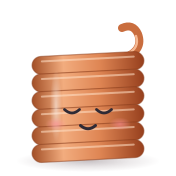
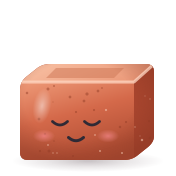
Your evenings? Tick what fits
Tick any that fit.
Five quick picks place you somewhere between copper and brick.
Find out in five picksVedic astrology
The planets and their clocks
The classical texts of Indian astrology were written by people with no stopwatch and a great deal of patience. They hand the mind to the Moon. Then, in a verse that reads like a railway timetable, Brihat Parasara Hora Sastra gives every planet its own unit of time. The Moon gets the muhurtha, the shortest on the list. Saturn gets the year, the longest.
So in the texts, the mind runs on the fastest clock in the sky. Our reading, which is ours and not the verse's: when the Moon in a chart is tied to a slower planet, Saturn most of all, a mood might keep that planet's hours instead of its own. Mars, in the same verse, keeps a day and a night, about how long the heat of a quarrel is supposed to last. The texts never mention calming down after lunch, and nobody has tested the idea. We are collecting the evenings to find out.
Ayana, Muhurtha, a day (consisting day and night), Ritu, month, fortnight and year : These are the periods allotted to the planets from the Sun to Saturn.Brihat Parasara Hora Sastra, 3.33
If the clocks are involved, you'd know some of these
Tick any that fit.
Now look at your chart
Open your Vedic chart in any free app (sidereal, Lahiri) and check for any of these:
Nothing on the list? Then your slow evenings come from somewhere else, or the idea is wrong. The experiment below works the same for every chart.
This is an untested hypothesis, not a forecast. A chart does not decide how your evening goes.
Your 15-day experiment
The slow fold
Lower the heat by hand. One shirt at a time.
- PsychologyPooled studies find calming activities such as slow breathing reduce anger, while revving the body up does not.
- MechanicsNobody can order a brick wall to cool. You can give the heat somewhere to go, at a steady rate, every evening.
- Karma alignmentThe verse gives Saturn the longest clock, and the texts give it patient labour. This is ten minutes on Saturn's time, by choice.
Each day
- Each evening after dinner, take the day's dry laundry. No laundry? Any pile of things that needs putting straight.
- Fold one piece per breath: in through the nose, then out for longer than you breathed in while your hands do the fold.
- No phone. If a brilliant rebuttal arrives, it can wait until the pile is done. It usually leaves.
- Put the pile away and note the time. About ten minutes.
Each evening, write one line for each
- Was there a tense moment today? Roughly what time did it end?
- What time did you feel like yourself again: within the hour, by evening, or not yet?
- After the fold, did your body feel slower, the same, or more wound up?
Day 1 of 15
Under fifteen minutes a day. Free. Nothing rides on it.
- Day 5 Look at your two times for each tense day. How many hours sit between them?
- Day 10 Is the gap changing or holding steady?
- Day 15 Compare the first five days with the last five. Then send us the numbers.
Quick answers
Why can't I calm down after an argument?
Going over an argument after it ends is linked with the heart and stress hormones staying active. People also differ in how quickly their moods change, so two people can leave the same argument and settle hours apart.
How long does it take to calm down after a fight?
There is no single number. People differ in how slowly a mood shifts, and going over the argument is linked with the body staying active for longer. If you stay wound up most days for weeks, speak to a professional.
Should I go for a run to calm down after an argument?
It may not help. A 2024 pooling of studies found that activities which raise the body's arousal, running included, did not reduce anger overall, while calming ones such as slow breathing did.